Along the coastal stretch from Blacksands to Devil’s Point, the sea remains a daily source of life and livelihood. Among the most prized fish caught in these waters is a species known locally in Mele language as Saraika—a schooling fish valued for its abundance, market demand, and role in community sustenance. Known to scientists as Decapterus macarellus (Mackerel Scad), the Saraika is a staple catch in the black-sand waters of Mele to Blacksands.
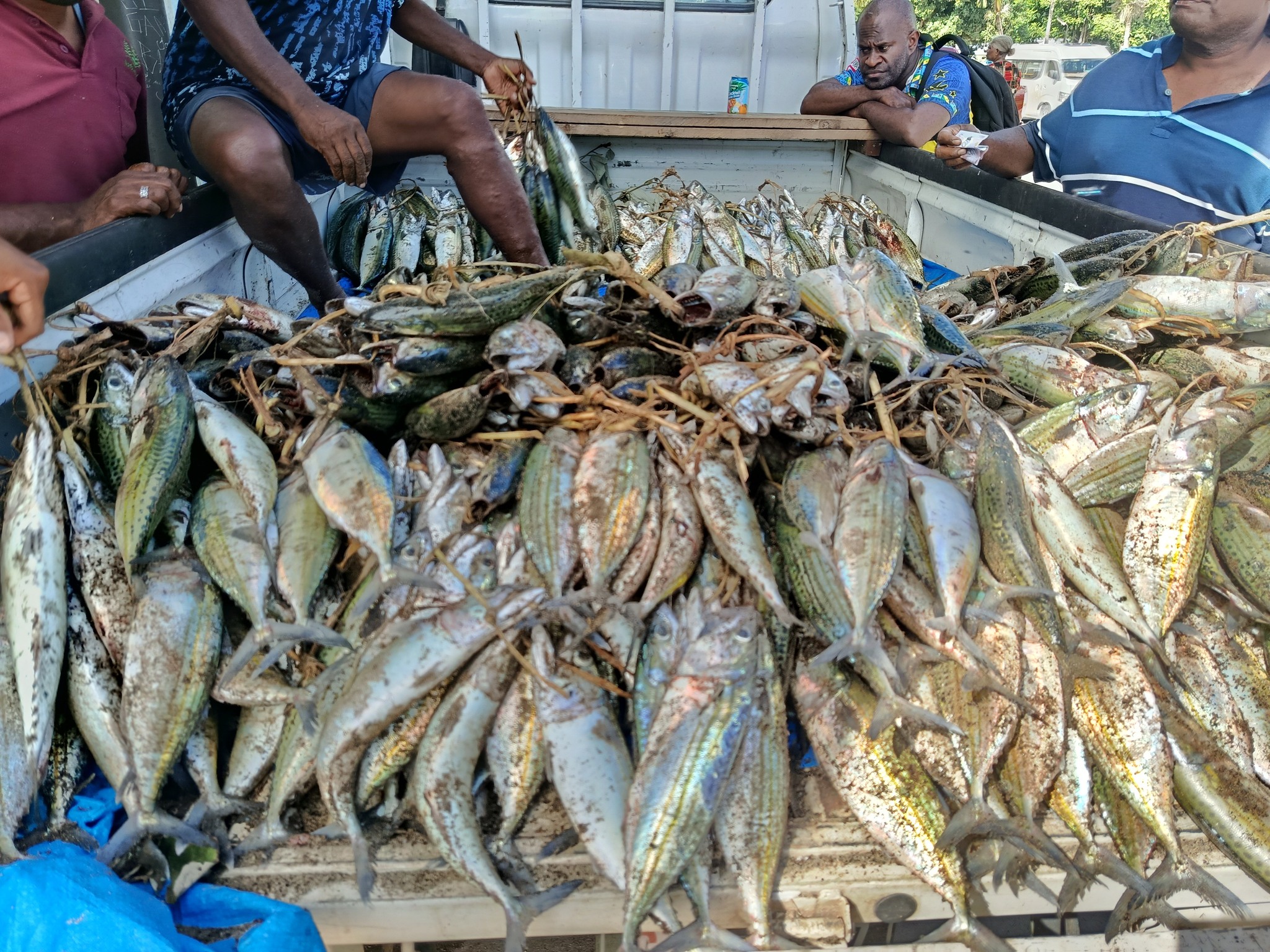
On Thursday, 12 June 2025, the local community witnessed a particularly successful day. Fishermen from Mele and surrounding areas brought in a large catch of Saraika, selling 700 bundles at 1,000 Vatu per bundle.
- That’s more than 2,100 fish sold
- Yielding 700,000 Vatu in just one day at the market
- With more bundles sold in Mele and surrounding areas, the full earnings for the day likely passed one million Vatu
The fish were caught using a 6-meter deep, 300-meter wide net, custom-sewn by a fisherman of Vietnamese origin who’s well-known in the community. Locals joke about the net, calling it a “drift net” due to its size and effectiveness—though it’s deployed in a traditional, controlled method. In just about an hour, the fish were skillfully chased into the net and brought ashore—a testament to local expertise, teamwork, and deep knowledge of fish behavior.
A Shared Resource, A Shared Opportunity
The people fishing these waters come from a diverse community—spanning from Waisisi to Mele and Blacksands. When asked if Mele village would consider charging a fee for use of its marine areas, a reliable source from Mele affirmed that no fees are collected. The initiative, they explained, is meant to support all surrounding communities, especially those who are land and sea custodians from Blacksands to Devil’s Point.
In this spirit, those earning from these waters are encouraged to acknowledge the Chief and people of Mele, whose leadership and generosity ensure that no barriers are placed on fishers seeking to feed their families and generate income.
The Daily Rhythm—and the Issue of Sustainability
While this week’s catch was particularly fruitful, it’s important to remember that this story plays out every day. Each morning, fishers head out—some return with full nets, others with little to show. It is a way of life grounded in hope, effort, and luck. The ocean is both provider and mystery, and success often depends on the movements of fish and the changing tides.
However, as fishing access expands and some traditional tabu (marine closure) areas appear to have been temporarily lifted, there are growing conversations about long-term sustainability. While species like Saraika remain plentiful for now, continued pressure without periodic recovery could impact future stocks. That said, the communities from Blacksands to Devil’s Point have a long history of managing their marine areas well, using rotational closures, seasonal restrictions, and customary practices to protect key species. Reaffirming and strengthening these traditions may be the key to ensuring that the bounty of today is still here tomorrow.
Click here to try Saraika Two Ways: Fried or in Coconut Milk
Enjoy Mackerel Scad, locally known as Saraika, with two classic island preparations. Fried Saraika is marinated in garlic, lime, and salt, then shallow-fried to crispy perfection—ideal with rice or plantains. For a richer dish, cook Saraika in coconut milk with ginger, tomato, and greens for a comforting, traditional stew served with root crops or rice. Both methods celebrate the fish’s flavor while honoring coastal culinary traditions.
Mackerel Scad in Coconut Milk (Saraika i Kuk I Kokonas)
Ingredients:
- 3 Mackerel Scad, cleaned and cut in halves or kept whole
- 1 medium onion, sliced
- 1 clove garlic, minced
- 1 thumb ginger, sliced thin
- 1 tomato, diced
- 2 cups fresh coconut milk
- 1 chili (optional), sliced
- Salt to taste
- A few taro leaves or island cabbage (optional greens)
Instructions:
Serve hot with: boiled yam, rice, or taro.
Sauté Base:
In a pot, cook onion, garlic, ginger, and tomato until soft.
Add Fish:
Lay the fish gently over the sautéed base.
Pour in the coconut milk and season with salt and chili.
Simmer:
Bring to a gentle simmer (do not boil hard).
Add greens and simmer uncovered for 10–15 minutes until fish is tender and the sauce thickens slightly.


 Mattdotvu
Leave a comment