For me, the journey of chat automation started with Telegram’s BotFather, facilitating bot creation and user interaction. The introduction of ChatGPT allowed for natural, context-aware conversations. Now, Meta AI Studio enables users to build AI chat experiences across platforms effortlessly, emphasizing user engagement and innovative design while minimizing technical complexities.
It All Started with Telegram
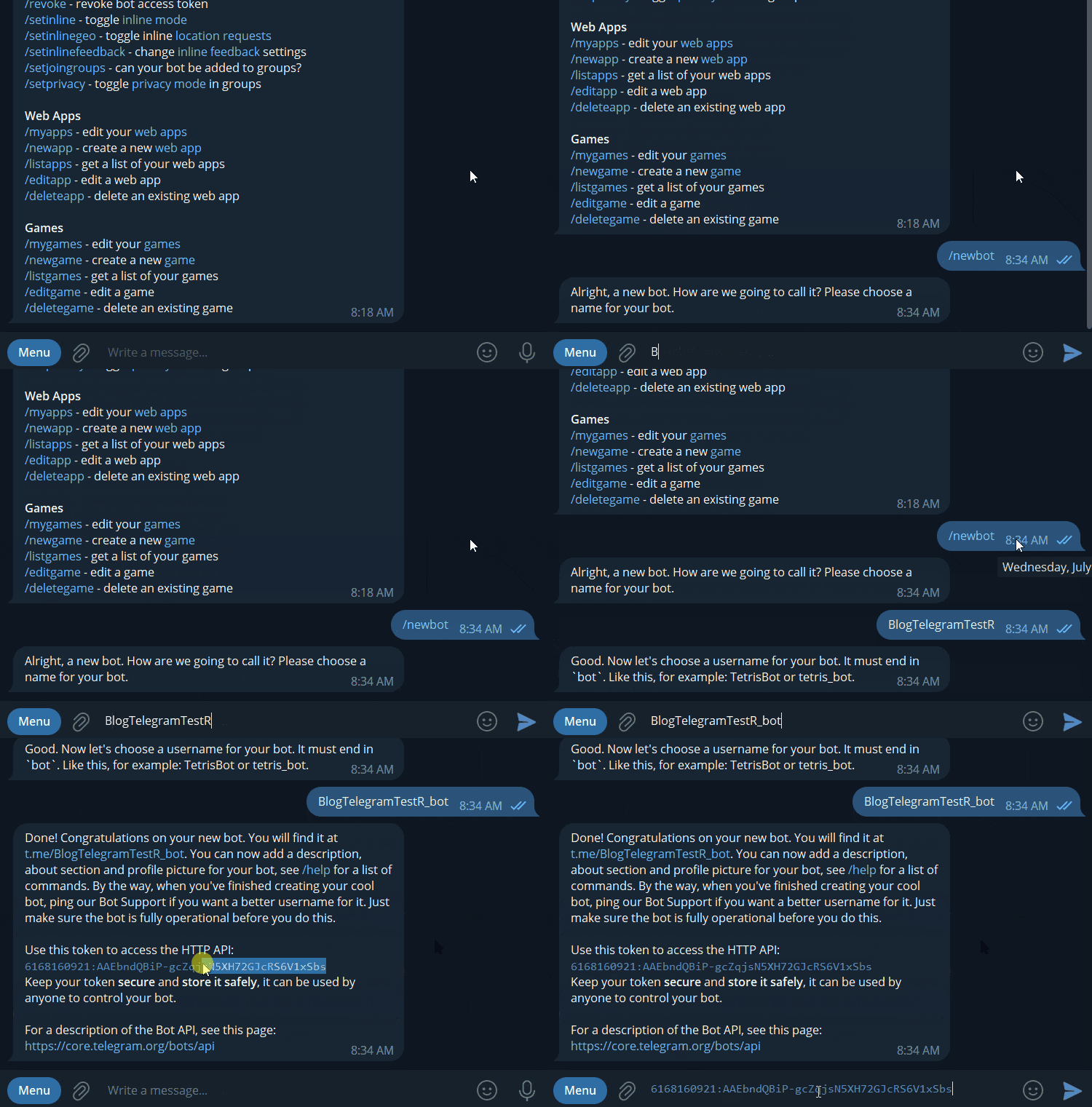
When I first explored chat automation, Telegram was the playground, and BotFather was our gatekeeper. If you know, you know—BotFather was where we created and managed bot tokens, set bot names, and configured commands before we could write a single line of code. Telegram’s bot API made it incredibly easy to spin up a bot that could respond to commands, process user inputs, and even handle transactions, all while users stayed comfortably inside their chats.
We built bots that could fetch weather data, generate PDFs on the fly, manage community polls, and handle crypto price lookups automatically. It was empowering to see how a few lines of Python could transform a chat interface into a powerful utility hub for communities and businesses.
These bots operated based on structured commands and predefined flows. While powerful, they were limited in their conversational capabilities. You could set up inline keyboards, command trees, and lightweight conversational patterns, but the interactions were still rigid unless you layered in natural language processing yourself.
Then Came ChatGPT and Prompt Engineering
Suddenly, we had language models capable of maintaining context, understanding nuance, and generating human-like responses. ChatGPT made it possible to add a conversational layer on top of our bots without reinventing the wheel with complex NLP stacks. It was a shift from handling structured commands to facilitating natural conversations. Users could type like humans, and the bots could respond in kind.
We experimented with merging Telegram bots and ChatGPT through APIs, creating assistants that could answer questions contextually, provide recommendations, and even adopt different tones. Today, Telegram can integrate with ChatGPT to provide advanced conversational capabilities within its familiar interface. However, setting up and maintaining these integrations still isn’t as fast or as simple as it could be, requiring backend management, token handling, and webhook configurations that may not be enjoyable for non-technical creators.
Meta AI Arrives on Messenger, Instagram, and WhatsApp
In September 2023, Meta began rolling out its AI assistant across Messenger, Instagram, and WhatsApp (beta), bringing conversational AI directly into platforms where users already spend their time.
In July 2024, Meta officially launched Meta AI Studio, allowing creators to build and deploy custom AI chat experiences across Messenger, Instagram, WhatsApp, and the web without worrying about backend architecture.
This evolution continued in June 2025, when WhatsApp added native Meta AI Studio integration, letting users create and interact with their own AI chatbots directly inside the app. Meanwhile, in April 2025, Meta released its standalone Meta AI app, seamlessly connecting with Messenger and other Meta platforms while enhancing the user experience with personalized AI.
The Natural Evolution of Chat Automation
It feels like we are witnessing the natural evolution of bots:
- Telegram bots gave us programmable, command-based chat automation.
- ChatGPT layered in natural conversation and dynamic understanding.
- Meta AI Studio (July 2024) enabled seamless AI chat deployment across Meta’s massive user base.
- June 2025 brought native WhatsApp AI Studio integration for instant AI creation and chatting.
- The Meta AI app (April 2025) unified these experiences across devices and platforms.
For developers, it opens a new chapter where you can focus on experience design rather than infrastructure, using AI to engage communities in deeper, human-like ways inside platforms where users already spend their time.
How Vanuatu Can Benefit
What started as simple automated responders in Telegram has now evolved into creating immersive conversational experiences with AI across platforms. It has been fascinating to watch, build, and now see how users themselves can harness these tools to create meaningful interactions in the spaces they care about.
For Vanuatu, this evolution offers exciting, practical opportunities:
- Disaster and Weather Alerts: Local developers can build Meta AI chat assistants that send cyclone warnings, tsunami alerts, and weather updates directly on Facebook Messenger or WhatsApp in Bislama, ensuring families receive timely information even in remote areas.
- Health Reminders: The Ministry of Health or local clinics can use AI chats to remind patients of vaccination days, prenatal checkups, or public health campaigns.
- Education Support: Schools and youth groups can create Telegram bots to share homework reminders, quiz practice, or updates about school events with students and parents.
- Tourism and Business: Local businesses and tourism operators can deploy chatbots that automatically answer FAQs about tours, accommodation, or transport, helping visitors get instant information while reducing phone call and admin loads.
- Language and Culture Preservation: AI chatbots can be trained to share kastom stories, language lessons in local dialects, and cultural information for schools and community groups.
The best part is that many of these solutions can be built with minimal upfront costs, using platforms people already use daily like Messenger and WhatsApp, and maintained by local youth trained in basic AI workflows.
By embracing these tools, Vanuatu can improve community engagement, strengthen emergency communications, support small businesses, and create opportunities for young developers to innovate in ways that directly serve our islands. This journey in chat automation isn’t just about technology—it’s about making life in Vanuatu easier, safer, and more connected for everyone.
Disclaimer: The videos and GIF images included in this post belong to their respective creators and are used here for illustration and educational purposes only. All personal experiences shared in this post are crafted and structured with the assistance of AI to help you read, learn, and explore how chat automation can serve communities like ours in Vanuatu.
 Mattdotvu
Leave a comment