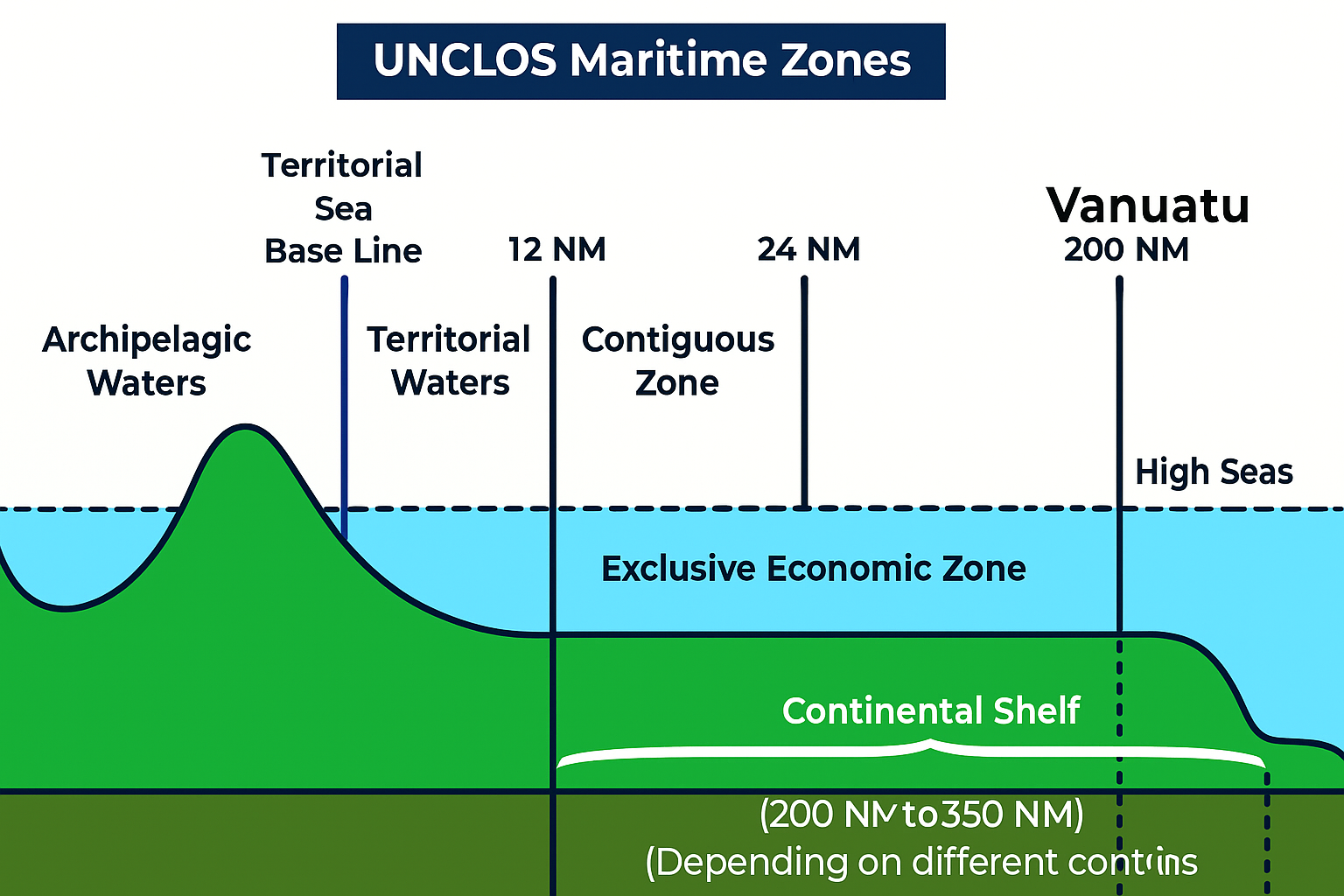
At the recent United Nations Ocean Conference (UNOC3) held in Nice, France, Fiji and Vanuatu marked a major milestone in global marine conservation by officially ratifying the Biodiversity Beyond National Jurisdiction (BBNJ) Agreement, commonly known as the High Seas Treaty.
This treaty is a groundbreaking international pact designed to protect marine biodiversity in the vast areas of the ocean that lie beyond any country’s exclusive economic zone — the so-called “high seas.” For years, these remote waters lacked clear legal frameworks to guard against threats such as overfishing, pollution, and deep-sea mining. Fiji and Vanuatu’s ratification sends a powerful message: island nations are not just stakeholders but leaders in shaping sustainable ocean governance.
A Seat at the Global Table
Dr. Sivendra Michael, Fiji’s Permanent Secretary for Environment and Climate Change, emphasized what ratification means for the island nation:
“This gives us a seat at the table to make the rules. It means we can embed Fijian priorities, like climate change and protecting marine species, into global ocean law.”
By joining the treaty, Fiji now has a direct role in international decision-making on marine conservation, benefit sharing of genetic resources from ocean organisms, and the establishment of marine protected areas (MPAs) on the high seas.
Filling the Legal Gaps for the High Seas
The High Seas Treaty fills critical gaps left by the United Nations Convention on the Law of the Sea (UNCLOS) — establishing frameworks for environmental impact assessments and ensuring that activities like shipping, fishing, and seabed mining are regulated with the health of the ocean in mind.
Dr. Michael explained:
“The agreement scales up conservation and sustainable use of marine biological diversity beyond national jurisdictions, for the benefit of all.”
For small island developing states (SIDS) like Fiji and Vanuatu, which are especially vulnerable to the impacts of climate change and marine degradation, this treaty offers legal tools to better protect the ocean ecosystems on which their economies and cultures depend.
Regional Leadership and Cooperation
Fiji and Vanuatu join other Pacific nations including the Solomon Islands and Tuvalu in ratifying the treaty, strengthening the regional voice for fair and effective governance of the global ocean commons.
This regional cooperation aims to balance conservation goals with food security and socio-economic needs, all while respecting cultural values tied to the ocean.
Practical Benefits for Coastal Communities
While the treaty focuses on distant waters, its benefits extend to coastal communities who rely on migratory marine species such as turtles, humpback whales, and hammerhead sharks — species that cross vast ocean distances but hold deep cultural significance in the Pacific.
Dr. Michael notes that sustainable management of the high seas can help reduce biodiversity loss and support revival of species critical to local livelihoods.
Next Steps for Fiji and Vanuatu
With ratification complete, the focus now shifts to aligning national laws with treaty standards and enhancing environmental impact assessments to meet international obligations.
Fiji’s Maritime Affairs Coordinating Committee, chaired by the Ministry of Foreign Affairs and supported by multiple agencies including the Ministry of Environment and Climate Change and Fiji Navy, will coordinate implementation efforts.
As an early ratifier, Fiji and Vanuatu are positioned to attend the first Conference of Parties (COP) to the treaty, ensuring their interests shape the rules and actions going forward.
The Bigger Picture: Ocean Health and Global Equity
The High Seas Treaty represents a chance to fix the highly inequitable management of the ocean commons. It promotes global equity by fairly sharing benefits from marine genetic resources and advancing cooperative governance that works for all nations — large and small.
In the words of Dr. Michael:
“This is our chance to create a governance system that works for everyone.”
Conclusion: Small Islands, Big Impact
From Suva to the global stage, Fiji and Vanuatu demonstrate that even small island nations can wield tremendous influence in protecting the planet’s future.
Their ratification of the High Seas Treaty is a beacon of hope — a call for all nations to step up and safeguard the ocean for biodiversity, climate resilience, and generations to come.
 Mattdotvu
Leave a comment